
1 February 2026
When life imitates art – women dealing with aggressive men
We’re often told that Old Bank House seems to be the set for some sort of mystery-thriller series. At any rate, a curious number of criminals seem to gravitate to our area only to be found out by our two girls, Mae and Isla. At least that’s what seems to prompt the police to come to the door (with which I am totally fed up). There was one occasion last summer with a bent security officer where things really did get a bit hairy and I thought I might have to deploy some of the techniques they taught us on the Cumbria Police Force. Except his sidekick really looked like a hard case. And that made me think about how to handle people you can’t reason with, who could get really violent in the blink of an eye.
Typically, that’s a drunk, and I had a lot of experience on the force dealing with those. But, because my house really does resemble crime fiction sometimes, I was also thinking how well some of the writers whose books I barely manage to squeeze in between Jim, daughters, Sellafield, Sainsbury’s, Reggie, Mum & Dad, etc. handle women in crime fiction where they have a confrontation with a man. And the best way to handle yourself is not like in one of those daft films where the heroine does a flying kick in high heels. Real life is much closer to the grounded scenes you find in proper crime novels — the ones written by people who’ve actually been in a pub after midnight (which I confess I have, particularly in my heavy-metal days). So, I went back and had a look at some of my favourite novels and how the women, whether female detectives or otherwise, handled realistic fight scenes.
Think of the tense but believable moments in:
- Tana French’s The Trespasser — where Antoinette Conway handles male aggression with icy calm and razor‑sharp awareness
- Denise Mina’s The Long Drop — full of women who survive because they read the room better than the men in it
- Ann Cleeves’ Vera novels — where barmaids and locals quietly defuse trouble long before Vera stomps in
- Kate Atkinson’s One Good Turn — with its brilliantly observed pub confrontations
Those scenes ring true because the women don’t rely on brute strength. They rely on sense. And that’s what I want for you. So, drawing on my experience and the examples of these smart ladies, here are a few rules:
1. First Rule: Keep Yourself Safe
If it’s a stranger who’s had too much, treat him the way the sensible women in those novels do — the ones who survive because they’re alert, not because they’re acrobats.
- Give yourself space. Like the barmaid in Blue Lightning who steps back before the argument turns.
- Stay calm. Hands visible, voice steady.
- Don’t try to reason. A drunk man’s logic is as useful as a witness in a noir thriller.
- Short sentences. Think of the clipped dialogue in The Trespasser.
- Walk away if he escalates. Even the toughest fictional detectives know when to retreat.
- But don’t ignore him completely. Keep him in your peripheral vision.
- Distract him if needed. Works in fiction and in life.
2. When the Drunk Man Is Someone You Care About
Plenty of novels show women managing drunk friends or partners — not with heroics, but with boundaries.
- Find sober allies. Like the loyal friends in Denise Mina’s books.
- Cut off the alcohol. Quietly, firmly.
- If they’re sleeping, recovery position.
- Check on them.
- Don’t put yourself in danger.
3. Handling Unwanted Advances
You see this in countless bar scenes across crime fiction.
- Be firm. Like the women in Kate Atkinson’s novels who can shut down a drunk with one raised eyebrow.
- Set boundaries.
- A ring on the left hand helps.
- Avoid deep conversation.
4. When It’s Time to Call for Help
Even in books, the smartest characters know when to bring in backup.
- Signs of alcohol poisoning? Call emergency services.
- Aggression or violence? Call the police.
- Long‑term patterns? Seek support.
5. What Not to Do
This is where fiction often gets it wrong.
- Don’t grab or restrain him.
- Don’t give coffee.
- Don’t cover for him.
In case you might think this is all just theory, or fiction, I remember one night in Barra Jacks in Whitehaven (won’t say why I was there) when a young woman handled a drunk lad better than half the constables I’d trained.
He staggered over, pint sloshing, and started with the usual nonsense:
“You’re too pretty to be drinking alone.”
She didn’t flinch. Didn’t smile. Didn’t apologise. Just said, calm as you like, “Not interested, pet. Off you go.”
When he leaned in closer, she didn’t push him or argue. She simply stood up — slowly — moved her chair back, and said, “I’m leaving now, and you’re staying here.”
Then she walked straight to the bar, told the landlord quietly, and he intercepted the lad before he could follow.
Textbook. Better than textbook. And this was similar to what happened one night in Keswick when I was on the Force where a woman in her forties came out of a pub looking shaken, with a man stumbling after her, shouting that she’d “misunderstood” him.
I stepped between them, palms open, voice low.
“Evening. Let’s all take a breath.”
The woman didn’t hide behind me. She stood beside me — chin up, shoulders back — and said, “I’m going home. He is not.”
Clear. Steady. No drama.
The man tried to bluster, but she didn’t engage. Didn’t justify. Didn’t explain. Just repeated, “I’m going home.”
I escorted her to the bus, and she thanked me, but truth be told, she’d done most of the work herself. She’d handled him the way the best fictional heroines do — not with fists, but with clarity.
I’ve never forgotten that. So, keep your head! That’s what gets women through the tricky bits — in books and in life.
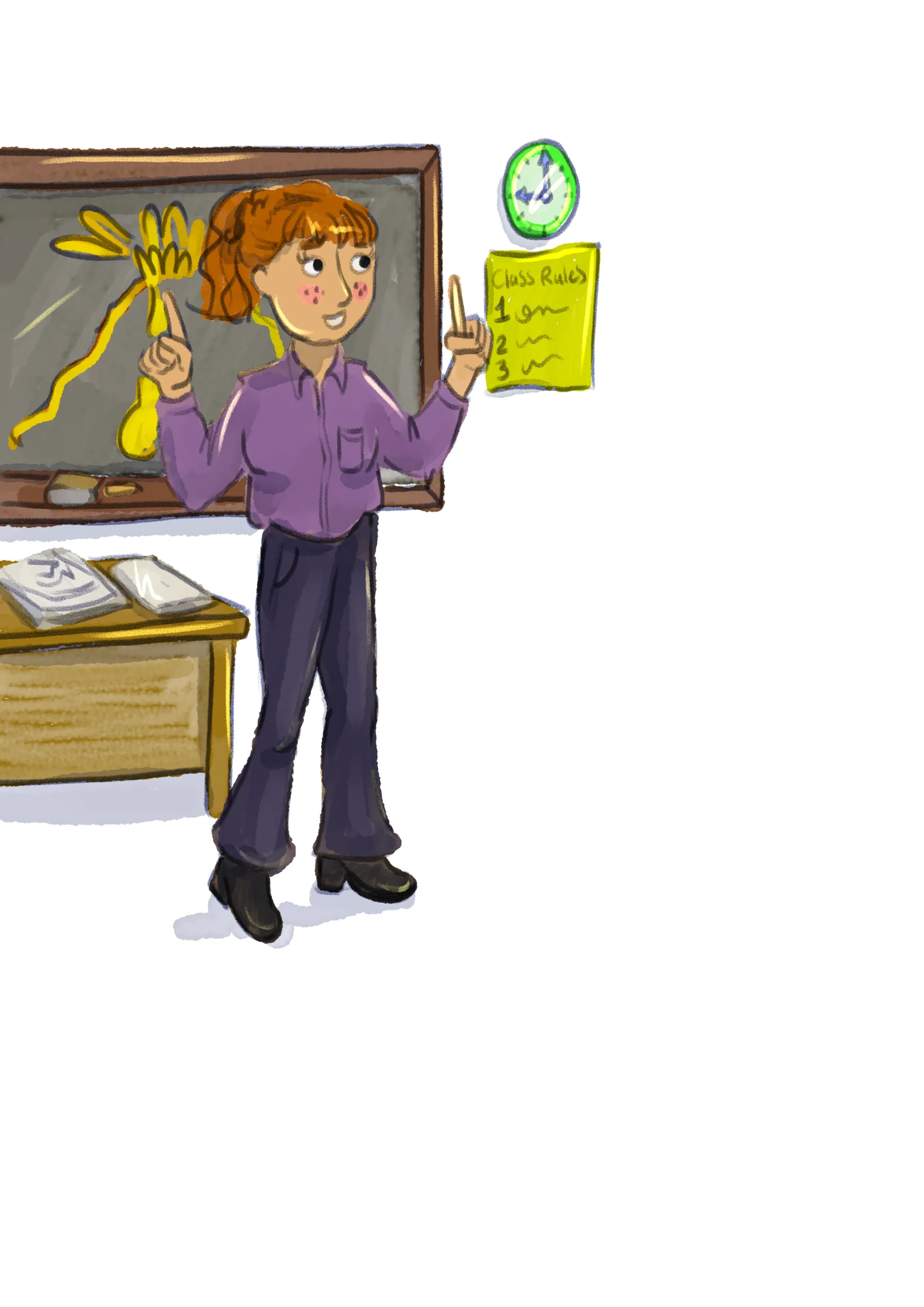
1 June 2025: I have had a varied career, starting as a teacher of geography at a remote private school where, as a 23-year-old, I was the only woman on staff. I had to manage unruly teenage boys and instill in them an appreciation for the world outside. Then I worked on the Cumbria police force dealing with crimes and misdemeanours that ranged from drunks in the street to terrible accidents. In doing these jobs, I learned a number of self-defence techniques for women that come in handy when dealing with the stream of baddies my daughters Mae and Isla seem to encounter and who are described in The Lakeland Mysteries – dastardly Darren Fletcher will certainly never forget our encounter!
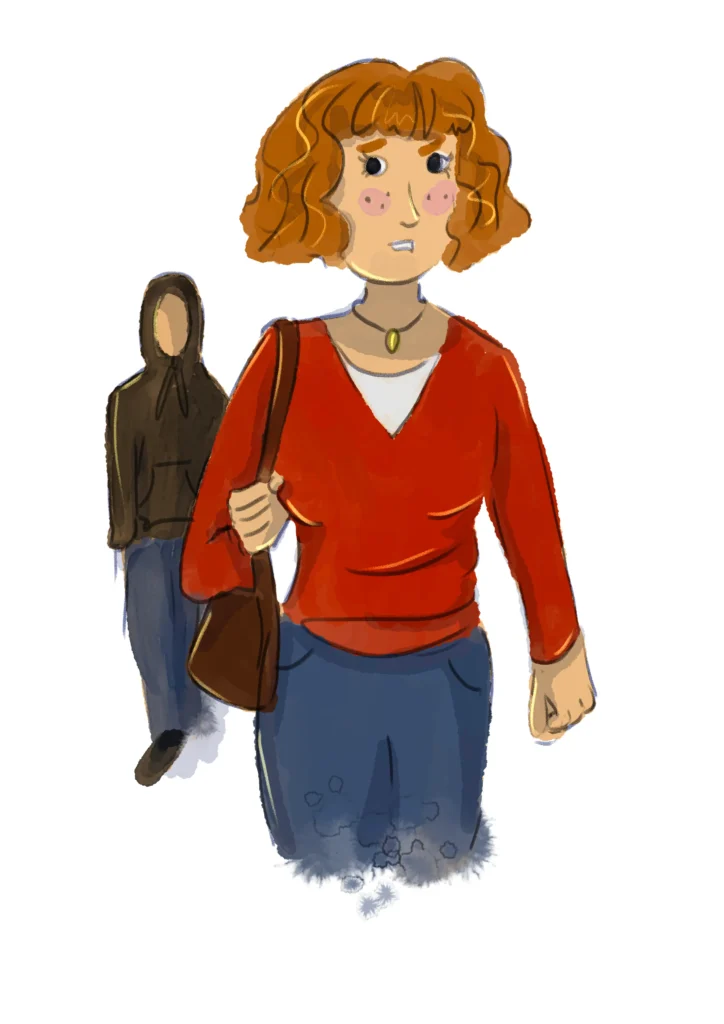
But let’s start with something simple, something that many of us have to deal with from time to time. Simple, stupid harassment when you’re out doing your shopping.
Street Harassment
In a street harassment situation, the initial steps involve disengaging and making yourself a less attractive target. This can include firmly setting verbal boundaries, using a personal safety alarm if available, and drawing attention to the harassment by shouting if it feels safe. If possible, attempt to escape the situation by crossing the street or entering a nearby shop.
Street harassment is unfortunately a reality for many, but there are effective self-defence techniques that can help you stay safe and assert control over the situation. Here are some key strategies:
- Awareness & Prevention
- Trust your instincts – If something feels off, act on it.
- Stay alert – Avoid distractions like looking at your phone while walking.
- Project confidence – Walk with purpose and maintain strong posture.
- Use your voice – A firm, loud “Back off!” can deter an aggressor.
- Physical Self-Defence Moves
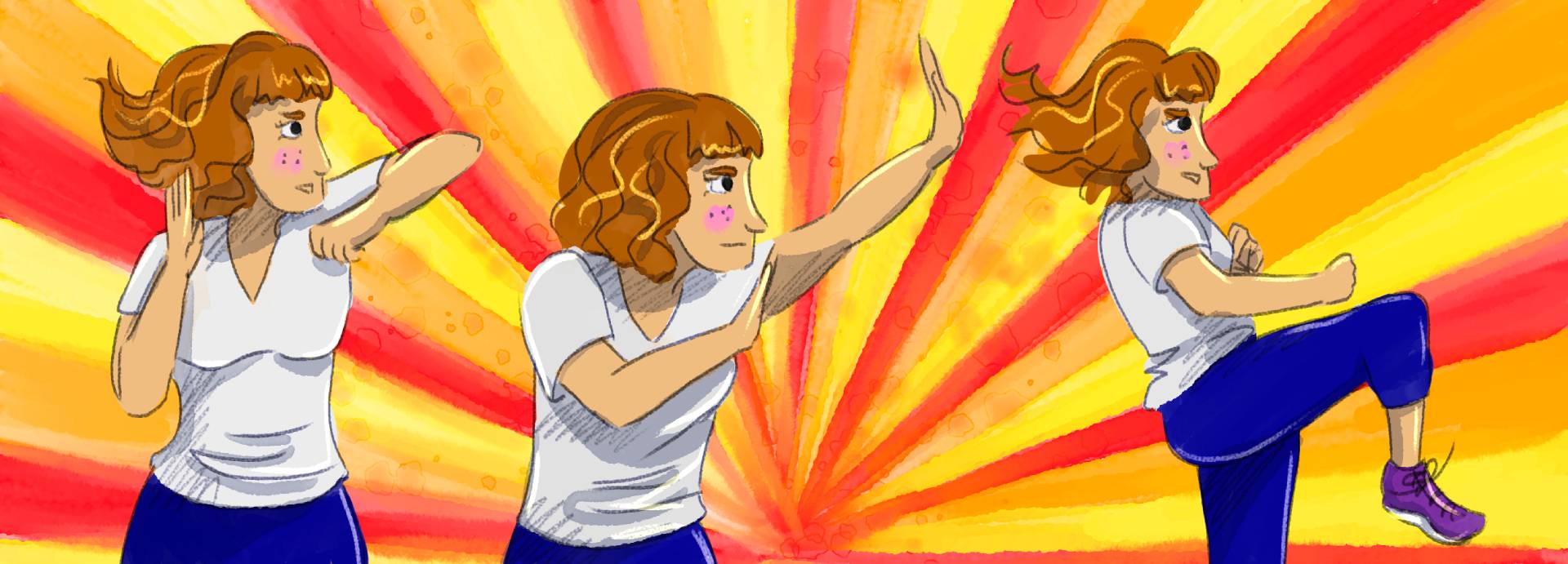
- Palm strike – Aim for the nose or chin with the base of your palm.
- Elbow strike – A powerful move to the ribs or face if the attacker is close.
- Knee strike – Target the groin for maximum impact.
- Escape techniques – If grabbed, use leverage to break free (e.g., twisting out of a wrist grip).
- Defensive Tools
- Personal alarms – Loud noise can startle and attract attention.
- Pepper spray – If legal in your area, it can provide a crucial escape window.
- Keys as a weapon – Holding them between your fingers can be useful in an emergency.
- De-escalation & Escape
- Avoid engaging – If possible, remove yourself from the situation quickly.
- Seek help – Move towards a group of people or a well-lit area.
- Use barriers – Put objects like cars or benches between you and the harasser.